

For a long time, Autism Spectrum Disorder (ASD) and Attention-Deficit/Hyperactivity Disorder (ADHD) were treated as mutually exclusive diagnoses. Until the publication of the DSM-5 in 2013, clinicians were formally prohibited from diagnosing both conditions in the same individual. This restriction has since been lifted, and with it has come growing recognition of a population that was largely invisible to clinical studies: adults who have both conditions simultaneously, a profile now commonly referred to as AuDHD.
The implications of this dual profile extend far beyond a simple addition of two diagnoses. Research consistently shows that the co-occurrence of autism and ADHD creates a distinct and compounded clinical picture, one that carries greater function impairment, higher rates of mental health difficulties, and more complex support needs than either condition in isolation.
For adults navigating this combination without a formal assessment, the consequences can be significant and lifelong. Understanding autism in adults as it intersects with ADHD is central to providing appropriate, timely, and effective care.
How Common is AuDHD?
The co-occurrence of autism and ADHD is far more prevalent than many people realise. The lifetime prevalence of ADHD in individuals with ASD was found to be approximately 40.2%. Other estimates place the figure even higher, with some reviews reporting co-occurrence of 50 to 70% depending on the population studied and the diagnostic criteria applied.
A large-scale real-world evaluation using health insurance claims data identified AuDHD as a distinct cohort with significantly higher rates of comorbid physical and psychiatric conditions compared to those with either autism or ADHD alone. The authors concluded that the co-occurrence of both conditions may synergistically increase the odds of additional health-related challenges, reinforcing the need for comprehensive, multidisciplinary assessment.
Despite this prevalence, a substantial proportion of adults with AuDHD remain unidentified. In the United Kingdom alone, it has been estimated more than 2.5 million adults live with undiagnosed neurodevelopmental conditions, including autism and ADHD. Many of these individuals have spend years receiving incorrect diagnoses, inadequate treatment, and support strategies that do not account for the full picture of their neurology.
Why AuDHD is Difficult to Identify in Adults
One of the central challenges in assessing AuDHD in adults is the significant overlap between the two conditions. Both autism and ADHD affect attention, executive function, emotional regulation, and social processing. When they co-occur, symptoms from each condition can mask, mimic, or amplify the other, making it considerably harder to reach an accurate differential diagnosis.
Masking and camouflaging, the process of consciously or unconsciously suppressing autistic traits to appear neurotypical, is particularly common in adults who reach adulthood without a diagnosis. Female-typical autism presentations are especially liked to be missed, with women more likely to receive prior psychiatric diagnoses such as anxiety, depression, or borderline personality disorder before autism is even considered. This delays accurate assessment by years or even decades.
ADHD further complicates the picture. A case report published in Cureus documented a 14-year-old patient who had been diagnosed with bipolar disorder and ADHD for years before an ASD assessment was eventually conducted and a dual diagnosis confirmed. The presence of ADHD symptoms has effectively obscured the autistic profile throughout the diagnostic process. This pattern is not unusual: research shows that a prior ADHD diagnosis is associated with a significantly delayed autism diagnosis.
Common reasons adult women with AuDHD go unassessed include:
- Symptoms being attributed to anxiety, depression, or personality disorders
- High cognitive ability masking functional difficulties in educational and work settings
- Gender bias in diagnostic criteria, which were historically developed using male populations
- Lack of clinician awareness of how AuDHD presents in adults
- Limited availabilty of specialist neurodevelopmental services for adults.
The Consequences of Going Unassessed
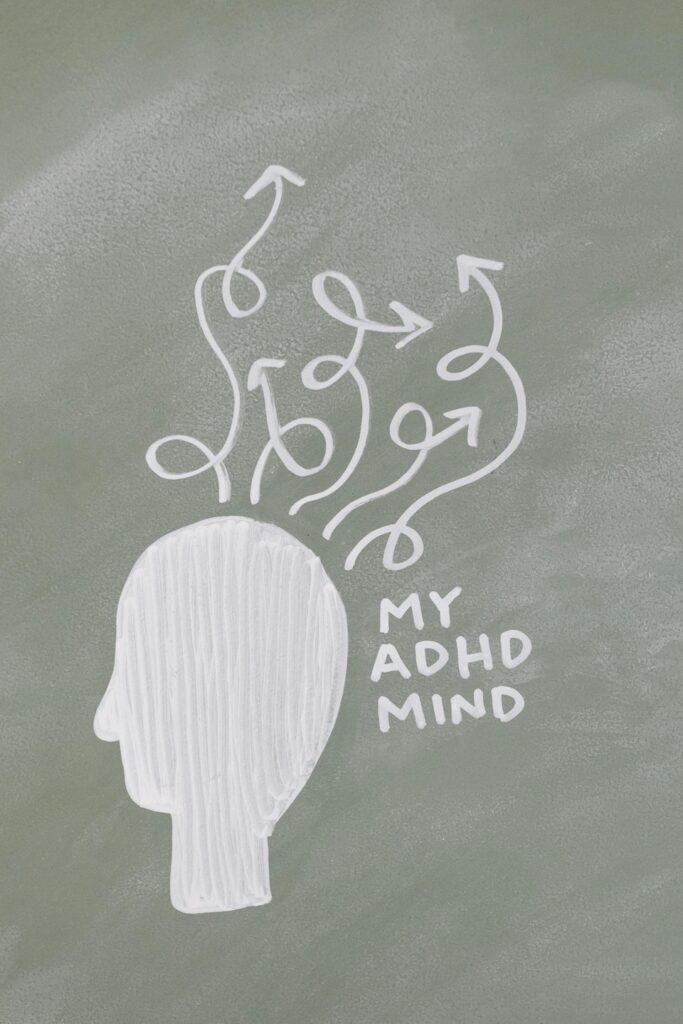
The risks associated with undiagnosed autism and ADHD in adults are well-documented. A review synthesising evidence from 17 studies identified three major themes of impact: health, offending behaviour, and day-to-day functioning. Across all three domains, the consequences of going unidentified were consistently negative.
On the mental health front, undiagnosed individuals showed higher rates of mental health conditions such as depression, anxiety, suicidal ideation, and psychiatric inpatient admissions. Adults referred to specialist ADHD clinics without a prior diagnosis were significantly more likely to meet criteria for multiple comorbid disorders, including generalised anxiety, agoraphobia, and dysthymia, compared to those who had received an earlier diagnosis.
Quality of life is also measurably affected. High autistic traits were found to be associated with lower quality of life across four domains measured: physical, psychological, social, and environmental. High ADHD traits independently reduced quality of life across three of those domains. Crucially, the effect of autistic traits on quality of life remained significant even after accounting for mental health difficulties, suggesting a direct and independent impact.
Beyond mental health, undiagnosed neurodivergence in adults has been linked to lower educational attainment, higher rates of unemployment, relationship breakdown, and financial instability. These outcomes are not inherent to the neurodivergent profile itself: they are the product of navigating a world without the understanding, adjustments, or support that an accurate diagnosis makes possible.
What a Comprehensive AuDHD Assessment Provides
A formal AuDHD assessment in adulthood does considerably more than produce a diagnotic label. It provides a structured, evidence-based framework for understanding how an individual’s neurology affects their daily functioning, mental health, relationships, and professional life. This information has direct practical value.
A thorough assessment will typically include a detailed developmental history, structured clinical interviews exploring both autistic and ADHD traits, cognitive and executive function testing where indicated, review of any prior diagnoses or mental health history, and consideration of how the two profiles interact in that specific individual. The importance of this last element cannot be overstated:
The AuDHD profile is not simply the sum of autism plus ADHD. Research using neuropsychological testing has demonstrated that individuals with comorbid ASD and ADHD present with compounded difficulties in working memory, emotion recognition, and cognitive flexibility that go beyond what either condition alone would predict. If a patient’s life is significantly affected by representations of both conditions, a clinician assessing only one condition in isolations risks missing the full picture and providing recommendations that address only part of the problem.
Following assessment, individuals gain access to:
- Accurate information about why certain tasks, environments, or relationships have consistently felt more effortful
- Personlised support strategies that reflect the combined profile rather than a generic neurodivergence advice
- Access to medication options where appropriate, since stimulant medications used for ADHD require careful consideration in the context of autism
- Legal protections under the Equality Act 2010 (applicable in the UK only), enabling reasonable adjustments in education and employment
- A foundation for self-understanding that reframes a lifetime of difficulties as neurological differences with known characteristics and evidence-based responses.
The Particular Importance of Assessment in Adults
Assessment in adulthood carries a different weight from childhood diagnosis. Many adults with AuDHD have already accumulated years of unexplained difficulties, failed coping strategies, and secondary mental health conditions. A late diagnosis does not undo that history, but research shows it significantly reframes it.
A qualitative study explored experiences of 13 late-diagnosed adults with autism and/or ADHD. Five key themes emerged from the data, including the central role of understanding in post-diagnosis change. Participants described how receiving a diagnosis allowed them to reinterpret past experiences, access appropriate support for the first time, and make meaningful adjustments to their lives – adjustments that had not been possible without an accurate understanding of their neurology.
A separate study examining the lived experience of adults receiving a late ASD diagnosis in Canada found that many participants had spent years receiving misdiagnoses or being treated for conditions that not fully explain their difficulties. Barriers to assessment included a lack of clinician knowledge about adult presentations, limited availability of specialist services, and the absence of clear information about how autism manifests in those who had developed effective compensatory strategies.
Conclusion
AuDHD is not a rare or peripheral condition. It affects a significant proportion of the neurodivergent population, carries a distinct and compounded clinical profile, and is consistently associated with poorer outcomes when it goes unrecognized. For adults who have spent years without understanding why so much of daily life feels harder than it should, a comprehensive AuDHD assessment can be genuinely life-changing as the starting point for receiving support that actually fits.
References
- Capp, S. J., Agnew-Blais, J., Lau-Zhu, A., Colvert, E., Tye, C., Aydin, Ü., Lautarescu, A., Ellis, C., Saunders, T., O’Brien, L., Ronald, A., Happé, F., & McLoughlin, G. (2023). Is quality of life related to high autistic traits, high ADHD traits and their interaction? Evidence from a young-adult community-based twin sample. Journal of Autism and Developmental Disorders, 53(9), 3493–3508.(2) Hirayama et al., J Hum Nutr Diet
- Cortese, S., et al. (2025). An update on the comorbidity of attention deficit/hyperactivity disorder (ADHD) and autism spectrum disorder (ASD) and its clinical management. Expert Review of Neurotherapeutics.
- Dolfi, A., et al. (2025). Diagnostic challenges of autism spectrum disorder in women without intellectual or language impairments: A narrative review. Journal of Medicine and Life, 18(8), 710–720.
- French, B., Daley, D., Groom, M., & Cassidy, S. (2023). Risks associated with undiagnosed ADHD and/or autism: A mixed-method systematic review. Journal of Attention Disorders, 27(12), 1393–1410.
- Hadi, E., et al. (2022). A delayed diagnosis of autism spectrum disorder in the setting of complex attention deficit hyperactivity disorder. Cureus, 14(7), e26813.
- Hours, C., Recasens, C., & Baleyte, J.-M. (2022). ASD and ADHD comorbidity: What are we talking about? Frontiers in Psychiatry, 13, 837424.
- Maber-Aleksandrowicz, S., et al. (2023). What does receiving autism diagnosis in adulthood look like? Stakeholders’ experiences and inputs. PLOS ONE, 18(6), e0286638.
- Manning, C., et al. (2023). Mental health and social difficulties of late-diagnosed autistic children, across childhood and adolescence. Journal of Child Psychology and Psychiatry, 64(2), 230–240
- Rong, Y., Yang, C. J., Jin, Y., & Wang, Y. (2021). Prevalence of attention-deficit/hyperactivity disorder in individuals with autism spectrum disorder: A meta-analysis. Research in Autism Spectrum Disorders, 83, 101759.
- Zaleski, A. L., Thomas Craig, K. J., Khan, R., Waber, R., Xin, W., Powers, M., Ramey, U., Verbrugge, D. J., & Fernandez-Turner, D. (2025). Real-world evaluation of prevalence, cohort characteristics, and healthcare utilization and expenditures among adults and children with autism spectrum disorder, attention-deficit hyperactivity disorder, or both. BMC Health Services Research, 25, 1048.
📩 Want to learn more about this and other topics? Join our newsletter for exclusive content and perks!